
February 7, 2024
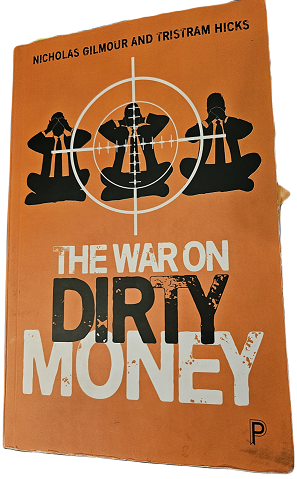
Dirty money is a global issue that affects us all. While many books have been written on the topic, most of them focus on specific areas such as human trafficking, drug trafficking, illicit finance, crypto, corruption, etc. However, ‘The War on Dirty Money’ is different. It takes a comprehensive approach to the problem of dirty money, offering solutions that are practical and effective.
Each chapter in the book contains a ‘solutions toolbox’ that provides readers with actionable steps to fight the global war on dirty money. The authors have used an authoritative yet approachable tone throughout the book, making even the most complex financial concepts and legal frameworks understandable to readers with varying levels of expertise.
Furthermore, this book is not just an academic text. It can be used as a reference guide for those who want to understand more about the issue of dirty money and how to combat it. The authors have skillfully crafted the book to be accessible to a broad audience, making it an excellent resource for anyone interested in learning about dirty money and its impact on society.
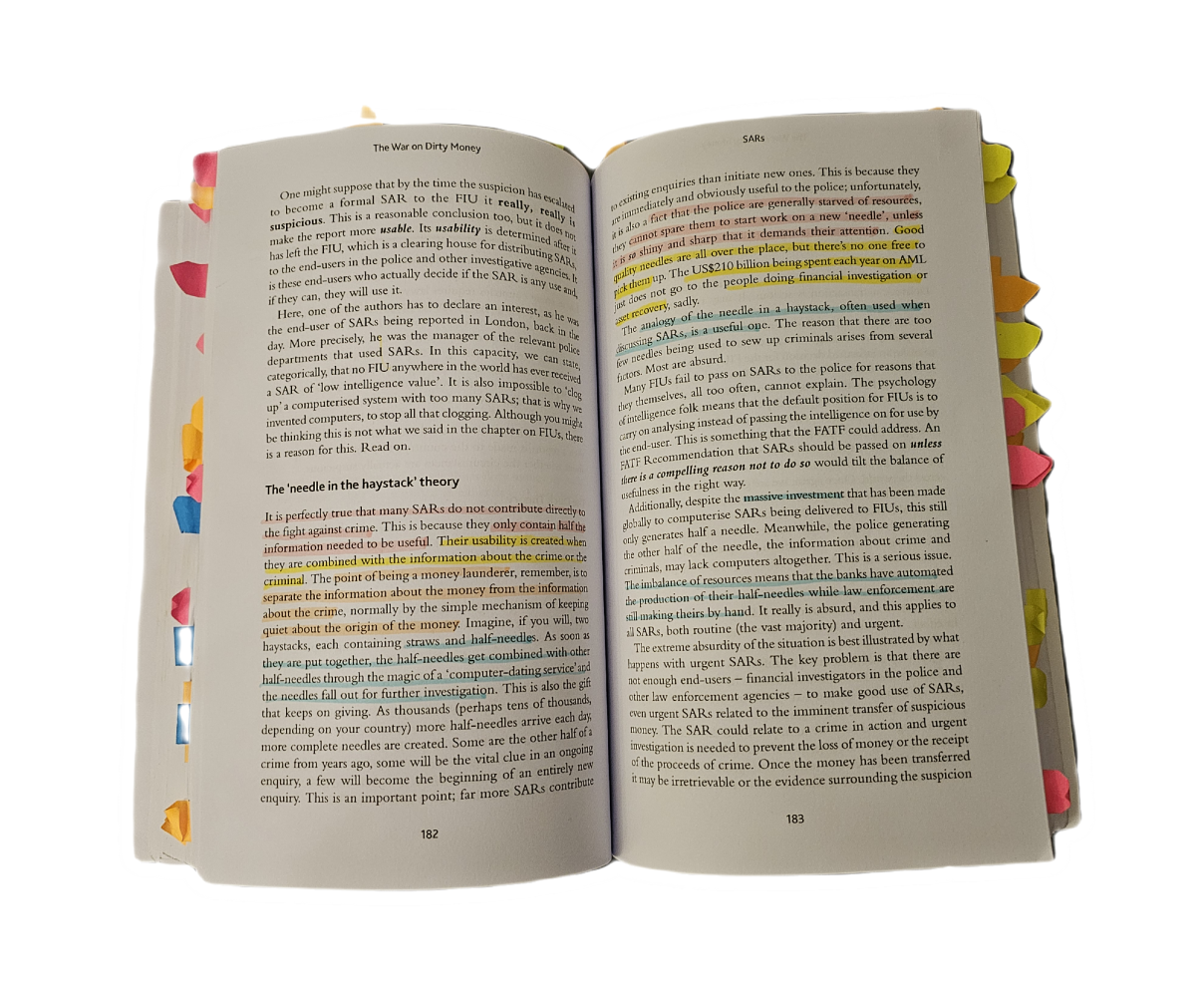
The existing regulatory framework governing the global anti-money laundering regime can be divided into two distinct parts: a well-resourced prevention regime that operates within the private sector and a public sector enforcement regime that is severely underfunded. The private sector’s prevention regime is equipped with ample resources, technology, and staff to identify and prevent financial crime. On the other hand, the public sector’s enforcement regime struggles with a lack of resources, technology, and expertise to investigate and prosecute financial crimes effectively. The two parts are connected through a massive investment in the generation of millions of “Suspicious Activity Reports” (SARs), which are intended to alert enforcers to potential financial crime. However, despite the huge investment, the system breaks down leading to SARs not being used as intended, not to mention that 34 million SARs are received yearly. This breakdown has significant consequences, such as a failure to identify and prevent money laundering, terrorist financing, and other illicit financial activities.
I liked the way, the authors have presented a thought-provoking discussion on the use of ‘fines’. They have highlighted the Peter (financial institution) to pay Paul (supervisor) approach of financial institutions. However, this practice is not effective in deterring money laundering as larger banks set aside provisions for such penalties. The need for greater transparency in the imposition of fines is emphasized. While fines draw attention to the issue of money laundering, they are not acting as a deterrent in the current AML regime.
The act of countering terrorist financing is unrelated to the broader efforts of combating money laundering. However, this practice has proven to be an effective tool in highlighting the inadequacies of anti-money laundering investments.
In the fight against money laundering, it is essential to identify and acknowledge the successful approaches that have been employed. These achievements should be celebrated and shared with international organizations, with the Financial Action Task Force (FATF) being a crucial example. To strengthen the collective effort, policymakers and academics need to work together, developing policies based on empirical evidence and building upon the successful strategies already in place. The FATF and its regional bodies can play a significant role in promoting this collaboration and supporting critical thinking and analysis through the facilitation of fresh empirical research. By doing so, we can continue to make progress in tackling dirty money and illicit financial activities.
In my viewpoint, the book seems to have overlooked the political dimension of the issue of dirty money. It would be helpful to conduct additional research to explore the intersection of politics and dirty money in greater depth. According to the authors, prevention experts have been using typologies and red flags as a substitute for actual experience. However, I personally disagree with this approach. Whenever I come across an alerted account, I always make sure to question the reasons behind it and carefully analyze if any red flags could be related to the suspicion. In my view, it is not entirely feasible to eliminate the usage of red flags as a measure to prevent money laundering.
 Site Title
Leave a comment